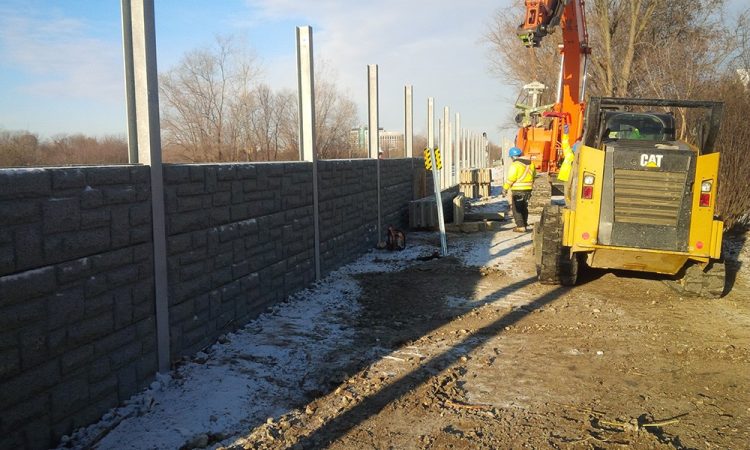
Most people don’t really notice a sound barrier until it’s missing or poorly installed.
That’s when construction noise feels sharper, more direct, and harder to ignore.
But when a sound barrier system is properly installed on site, the difference isn’t subtle. It changes how the entire site interacts with its surroundings.
It’s less about reducing noise to zero and more about turning something chaotic into something controlled.
The First Change: Noise Feels Softer and More Distant
One of the earliest things people notice is how the noise “feels.”
Without any control, sound travels straight out of the site and hits nearby buildings or walkways directly.
With a construction sound barrier in place:
- Direct sound paths are interrupted
- Noise is partially absorbed before it escapes
- What reaches the outside feels less intense
So instead of sharp, front-facing noise, it feels more like background activity happening at a distance.
That shift alone makes construction far more tolerable.
Sudden Impacts Become Less Disruptive
Construction noise isn’t just about volume-it’s about impact.
Short bursts like:
- Hammer strikes
- Metal clashing
- Concrete drilling
…are often what people find most irritating.
A properly installed temporary acoustic barrier helps:
- Break the force of these sudden sounds
- Reduce how “jarring” they feel
- Spread out the energy so it’s less concentrated
It doesn’t remove the sound completely, but it changes the way it hits your ears.
Noise Stops Building Up Across the Site
On an active site, noise doesn’t just come from one source, it accumulates.
Multiple machines, overlapping tasks, and reflective surfaces can create a kind of “layered noise effect.”
When barriers are installed properly:
- Sound is contained closer to where it’s generated
- Less noise travels across the entire site
- Echo and reflection are reduced in certain areas
This prevents the site from sounding louder than it actually is.
External Areas Experience More Stable Noise Levels
Without proper barriers, noise levels can feel unpredictable.
One moment it’s quiet, then suddenly loud depending on what’s happening inside.
With a well-installed sound barrier system:
- Noise becomes more consistent throughout the day
- Sudden spikes are reduced
- The overall sound profile feels more controlled
For nearby residents or offices, this consistency matters more than people think. It’s easier to adapt to steady noise than to constant fluctuations.
Installation Quality Changes Everything
Here’s the part that often gets overlooked:
the way a barrier is installed matters just as much as the barrier itself.
Proper installation ensures:
- No gaps or openings where sound can leak through
- Correct height to block major sound paths
- Tight panel alignment for continuous coverage
- Strong structural support to keep everything stable
Even small mistakes, like a few centimetres of spacing, can reduce effectiveness significantly.
Sound doesn’t need a large opening. It just needs a path.
Layered Protection Becomes Noticeable
In real construction environments, barriers are rarely used alone.
When installed properly, they work as part of a layered system:
- Barriers near machinery contain noise at the source
- Mid-site barriers limit how far it spreads
- Perimeter barriers protect surrounding areas
Each layer reduces the noise further.
By the time it reaches outside the site, it’s no longer the same level of intensity.
This layered effect is what makes properly installed systems feel significantly more effective.
Less Sound Leakage Means Better Overall Control
One of the biggest improvements from proper installation is reduced leakage.
Without proper sealing and alignment:
- Sound escapes through joints
- Corners become weak points
- Openings near the ground or top let noise pass through
With proper installation:
- Coverage is continuous
- Weak points are minimised
- Sound has fewer escape routes
This doesn’t just reduce noise-it makes the entire system more predictable.
A More Controlled Site Environment
The benefits aren’t only outside the site.
Inside, a properly installed barrier helps:
- Create clearer work zones
- Reduce cross-site noise interference
- Improve communication in certain areas
- Make the environment feel more organized
When noise is less chaotic, operations tend to feel more structured.
Better Alignment With Real-World Conditions
Construction sites are rarely ideal environments.
There are always constraints:
- Limited space
- Changing layouts
- Moving equipment
- Weather exposure
A properly installed barrier takes these into account.
It’s not just placed-it’s adapted to the site:
- Positioned based on current noise sources
- Adjusted as work progresses
- Reinforced where needed
This adaptability is what keeps it effective over time.
The Subtle but Important Psychological Effect
There’s also something less obvious happening.
When people see and experience a well-managed site:
- Noise feels intentional, not chaotic
- There’s a sense that the situation is under control
- Frustration levels tend to be lower
Even if the noise is still present, it feels less intrusive because it’s being managed properly.
Final Thoughts
When a sound barrier is properly installed, it doesn’t just reduce noise-it reshapes how that noise behaves.
A well-executed sound barrier helps:
- Soften and redirect sound before it spreads
- Reduce sudden and disruptive noise peaks
- Create a more stable and controlled environment
In real-world construction, that level of control is what makes the difference.
Because at the end of the day, the goal isn’t silence. It’s making sure the noise stays where it should and doesn’t take over everything around it.