
Precision Hermetic Feedthrough for Laboratory Instrumentation
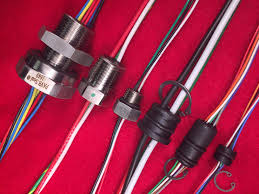
Modern laboratory instrumentation is the foundation of scientific discovery, medical diagnostics, chemical analysis, and advanced material research. These instruments require extremely stable, accurate, and contamination-free operating environments to produce reliable results. From mass spectrometers and electron microscopes to vacuum chambers and analytical sensors, laboratory systems depend on highly controlled conditions. One of the most critical components enabling this performance is the hermetic feedthrough, which allows electrical and signal connections to pass through sealed environments without compromising isolation. A precision hermetic feedthrough ensures that laboratory instrumentation maintains accuracy, stability, and long-term operational integrity.
Role of Hermetic Feedthrough in Laboratory Instrumentation
Laboratory instruments often operate in environments where even the smallest level of contamination, moisture, or air leakage can affect experimental outcomes. Many advanced systems rely on vacuum chambers or controlled atmospheric conditions to ensure measurement precision.
A hermetic feedthrough provides the essential interface between the internal sealed environment and external control or data systems. It enables electrical signals, power lines, and sensor connections to pass through the chamber wall while preserving complete environmental sealing.
Without a reliable feedthrough system, laboratory instruments would suffer from signal interference, contamination, and measurement inaccuracies, making precise scientific analysis impossible.
Importance of Precision in Hermetic Feedthrough Design
In laboratory instrumentation, precision is not optional-it is essential. Even minor electrical noise or leakage can distort experimental data or damage sensitive equipment.
A precision hermetic feedthrough is designed with extremely tight tolerances to ensure stable electrical performance and perfect sealing integrity. It must maintain consistent conductivity while preventing any form of environmental intrusion.
Precision engineering also ensures that each signal channel remains isolated, preventing cross-talk between electrical lines in high-density instrumentation systems.
This level of accuracy is critical in fields such as spectroscopy, chromatography, nanotechnology research, and biomedical analysis.
PAVE Technology and High-Precision Hermetic Feedthrough Solutions
In the field of advanced laboratory engineering, PAVE Technology is recognized for developing high-performance hermetic feedthrough solutions specifically designed for precision instrumentation. The company focuses on delivering ultra-reliable sealing systems that meet the strict requirements of scientific and analytical environments.
PAVE Technology designs feedthrough systems used in laboratory vacuum chambers, analytical devices, research equipment, and high-sensitivity measurement systems. Their engineering expertise ensures that each component provides long-term stability, minimal signal loss, and complete environmental protection.
By combining advanced materials, precision manufacturing, and rigorous testing, PAVE Technology delivers hermetic feedthrough solutions that meet the highest standards of laboratory performance.
Material Selection for Laboratory Feedthrough Systems
Material selection is a critical factor in ensuring the performance of a hermetic feedthrough in laboratory instrumentation. These environments often involve exposure to vacuum conditions, reactive chemicals, and thermal variations.
Ceramic materials such as alumina are widely used for insulation due to their excellent dielectric properties, high thermal stability, and resistance to chemical corrosion. These properties make them ideal for sensitive laboratory environments.
Metals such as stainless steel, titanium, and nickel alloys are commonly used for structural components due to their strength, corrosion resistance, and long-term durability.
Glass-to-metal sealing technology is also used in high-precision applications where ultra-low leakage rates and long-term reliability are required.
PAVE Technology carefully selects and tests all materials used in its hermetic feedthrough systems to ensure optimal performance in laboratory conditions.
Hermetic Feedthrough in Vacuum-Based Laboratory Systems
Many laboratory instruments operate under vacuum conditions to eliminate air interference and improve measurement accuracy. Examples include electron microscopes, mass spectrometers, and surface analysis tools.
A hermetic feedthrough allows electrical connections to pass into and out of vacuum chambers without breaking the vacuum seal. This ensures that sensors, detectors, and control systems function properly while maintaining a controlled internal environment.
Even the smallest leak in a vacuum system can significantly impact experimental accuracy and instrument performance.
PAVE Technology provides precision-engineered feedthrough solutions designed specifically for high-vacuum laboratory systems where stability and sealing integrity are critical.
Applications in Analytical and Measurement Instruments
Analytical laboratory instruments rely heavily on precise electrical signals and stable environmental conditions to produce accurate results.
A hermetic feedthrough is used in instruments such as gas analyzers, liquid chromatography systems, and spectroscopy equipment to ensure reliable signal transmission between internal and external components.
These systems often require multi-channel feedthroughs to support complex sensor arrays and data acquisition modules.
PAVE Technology develops customized feedthrough solutions designed to meet the high precision requirements of modern analytical instrumentation.
Role in Biomedical and Life Science Research Equipment
Biomedical laboratories and life science research facilities use highly sensitive instruments for studying biological processes, cells, and molecular structures.
A hermetic feedthrough is used in equipment such as incubators, bioreactors, and imaging systems to maintain sterile environments while enabling electrical connectivity.
These systems require strict contamination control to ensure accurate biological results and prevent experimental errors.
PAVE Technology supports biomedical research by providing advanced feedthrough systems designed for sterility, reliability, and long-term stability.
Electrical Performance and Signal Integrity
One of the most important functions of a hermetic feedthrough in laboratory instrumentation is maintaining electrical signal integrity. Many laboratory systems rely on low-noise, high-precision signals for accurate data acquisition.
Feedthroughs must minimize resistance, prevent electromagnetic interference, and ensure stable transmission across multiple channels.
Cross-talk between signals must be eliminated to maintain measurement accuracy in complex instrumentation setups.
PAVE Technology engineers its feedthrough systems with advanced design techniques to ensure optimal electrical performance in high-sensitivity laboratory environments.
Engineering Challenges in Laboratory Feedthrough Design
Designing a precision hermetic feedthrough for laboratory instrumentation involves several engineering challenges.
Miniaturization is a major challenge as modern laboratory devices require compact, high-density designs with multiple signal channels in limited space.
Thermal stability is also critical, as laboratory instruments may operate under varying temperature conditions that can affect material performance.
Chemical resistance is necessary for systems exposed to reactive gases or liquids during experiments.
Long-term reliability is essential because laboratory instruments are expected to perform consistently over extended research cycles.
PAVE Technology addresses these challenges through advanced engineering design, simulation tools, and precision manufacturing processes.
Testing and Quality Assurance for Laboratory Applications
Every precision hermetic feedthrough must undergo strict testing to ensure performance and reliability in laboratory environments.
Helium leak testing is used to confirm absolute sealing integrity. Electrical testing ensures stable signal transmission and insulation performance across all channels.
Thermal cycling tests evaluate durability under changing temperature conditions, while vibration testing ensures mechanical stability.
Chemical resistance testing confirms compatibility with laboratory reagents and experimental environments.
PAVE Technology applies rigorous quality assurance procedures to ensure that each feedthrough meets international laboratory and scientific equipment standards.
Future Trends in Laboratory Hermetic Feedthrough Technology
The future of hermetic feedthrough technology in laboratory instrumentation is being shaped by increasing automation, miniaturization, and digital integration.
One major trend is the development of ultra-compact, high-density feedthrough systems capable of supporting more complex instrumentation in smaller devices.
Another trend is the integration of smart diagnostic features that can monitor seal integrity and electrical performance in real time.
Advanced materials such as nano-ceramics and hybrid composites are also being explored to enhance durability and signal performance.
PAVE Technology continues to innovate in this field by developing next-generation precision hermetic feedthrough systems designed for future laboratory instrumentation.
Conclusion
The hermetic feedthrough is a vital component in precision laboratory instrumentation, enabling secure electrical connectivity while maintaining complete environmental isolation. From vacuum-based analytical systems and biomedical research equipment to high-precision measurement instruments, these components ensure accuracy, stability, and long-term reliability.
With its expertise in advanced engineering and precision manufacturing, PAVE Technology delivers high-performance hermetic feedthrough solutions designed to meet the demanding needs of modern laboratories. As scientific research continues to evolve, the importance of precision feedthrough technology will continue to grow, making it an essential foundation for accurate and reliable laboratory instrumentation.